
Welcome
Sign in to your account

Enter your email and we'll send a one-time code for instant access.
Looking for advice on CO2 vs Fiber lasers for firearms engraving? Welcome to your ultimate guide on selecting the top fiber laser engraver for guns, and get step-by-step instructions on how you laser engrave your handguns, revolvers, shortguns, rifles, pistols and other types of gun parts.
Contents:
Part 1: Can You Engrave A Gun with A Laser Engraver
Part 2: How Much Does It Cost to Get a Gun Laser Engraved
Part 3: CO2 vs Fiber Lasers for Firearms Engraving: What to Choose
Part 4: Fiber Laser Engraver for Guns: Key Features to Look for
Part 5: Review of Top Fiber Laser Engravers for Firearms
Part 6: How to Laser Engrave Your Gun Step by Step
Part 7: Creative Engraving Ideas and Design Tips for Firearms
Part 8: Legal and Regulatory Considerations in Gun Engraving
Yes, you can engrave a gun with a laser engraver, and it's a popular method for both personalization and compliance with identification regulations. Laser engraving guns involves using a high-powered beam to etch designs, text, or patterns directly onto metal surfaces, such as the slide, barrel, or receiver of a firearm. This technique is favored for its precision, permanence, and the ability to create intricate and detailed artwork without damaging the structural integrity of the gun.

When considering gun laser engraving cost, 3 key factors come into play that can influence the overall price: the complexity of the design, the type of firearm, and the laser engraving service provider.
The cost of gun laser engraving can vary depending on the intricacy of the design. Simple engravings such as serial numbers or basic patterns may cost as little as $50 to $100. However, more elaborate custom designs or detailed artwork can significantly increase the price, ranging from several hundreds to thousands of dollars.
The cost to get a gun laser engraved also depends on the type of firearm being engraved. For example, engraving a handgun may be less expensive than engraving a rifle due to the smaller surface area to cover. Additionally, some firearms may require special preparation or handling, which can impact the overall cost.
If you're wondering about laser gun engraving near you, it's essential to research local engraving services and compare prices. Keep in mind that prices may vary based on location, the reputation of the service provider, and the quality of their work. Be sure to read reviews and ask for samples of previous engraving projects before making a decision.
Whether you're looking for a simple serial number engraving or a custom design, investing in personal firearm laser engraving machine proves to be a valuable asset for both enthusiasts and professionals alike. Firstly, it allows for unmatched customization and personalization of firearms, Secondly, while the initial investment may seem substantial (usually from thousands to over $20,000), the long-term cost-efficiency becomes evident as you save on outsourcing fees and gain control over your engraving projects.
Moreover, the versatility and adaptability of a personal engraver extend beyond firearms, allowing you to engrave a variety of materials, including metals, plastics, leather, and etc.
When it comes to engraving firearms, the choice between CO2 and fiber laser engravers is crucial. Fiber lasers offer 3 key benefits that make them the preferred choice for your gun engraving needs.

Fiber laser engraving machines for guns excel in delivering precise and intricate designs with exceptional detail. Thanks to their high-powered and focused beam, fiber lasers can achieve finer lines and sharper edges, making them ideal for engraving intricate patterns, logos, or serial numbers on firearms. This precision ensures that even the smallest details are accurately reproduced, enhancing the overall quality and aesthetics of the engraving.
When it comes to engraving metal surfaces, such as those found on firearms, fiber lasers outperform CO2 engravers in terms of durability and marking quality. Fiber lasers are specifically designed to excel in marking metals, including steel, aluminum, and titanium, with superior permanence and resistance to fading or corrosion over time. This makes fiber laser engraving machines the go-to choice for achieving long-lasting and high-quality markings on metal firearms, ensuring that the engraving remains clear and legible even under harsh conditions.
In addition to superior precision and marking quality, fiber laser engravers for guns offer faster processing speeds and greater efficiency compared to CO2 engravers. The advanced technology and design of fiber lasers enable them to engrave firearms at significantly higher speeds, reducing production time and increasing throughput. This efficiency is particularly beneficial for professionals or businesses looking to optimize their workflow and meet tight deadlines without compromising on the quality of the engraving.
With the versatility and performance of fiber lasers, you can take your firearm engraving to new heights, creating stunning and durable markings that stand the test of time.
Investing in a fiber laser engraver for firearms requires careful consideration of several key features to ensure optimal performance and results. Here are some essential characteristics to look for when choosing a fiber laser engraver for engraving guns:
The power output of a fiber laser engraver is a crucial factor to consider, as it directly impacts the depth and speed of the engraving process. For firearms engraving, a higher power output is often desirable to achieve deeper and more precise markings on metal surfaces. What watt laser to engrave firearms? Typically, a fiber laser engraver, ranging from 20 to 50 watts, can handle the demands of firearm engraving projects effectively.
The wavelength of the laser beam emitted by the engraver is another important consideration, especially when engraving metals like steel, aluminum, or titanium commonly found in firearms. Fiber lasers with wavelengths around 1064 nanometers (nm) are well-suited for metal engraving applications, offering optimal absorption and marking quality on metallic surfaces. Ensure that the wavelength of the fiber laser engraver aligns with the materials you intend to engrave on your firearms for optimal results.
Precision is paramount when engraving firearms, particularly when creating intricate designs or detailed markings. Look for a fiber laser engraver equipped with high-quality optics and advanced control systems that ensure precise beam positioning and consistent engraving depth. Features like fine-tuned focusing mechanisms and real-time monitoring capabilities contribute to achieving accurate and uniform engraving results across the entire surface of the firearm.
Consider the size of the engraving area offered by the fiber laser engraver and ensure that it meets your specific firearm engraving needs. Whether you're engraving handguns, rifles, or other firearm components, having adequate space to accommodate various sizes and shapes of firearms is essential. Additionally, verify the compatibility of the engraver with different types of firearm materials, including metals, polymers, and composite materials commonly used in gun manufacturing, to ensure versatility and adaptability.
The software and user interface of the fiber laser engraver play a significant role in the ease of operation and control over the engraving process. Look for engraving machines with intuitive software interfaces that offer user-friendly navigation, customization options, and advanced design tools for creating or importing artwork. Features like preview modes, layer management, and engraving parameter presets enhance workflow efficiency and simplify the setup of complex engraving projects on firearms.
By prioritizing these key features when selecting a fiber laser engraver for firearms engraving, you can ensure that your investment meets the demands of precision, versatility, and performance required to achieve exceptional results on your gun engraving projects.
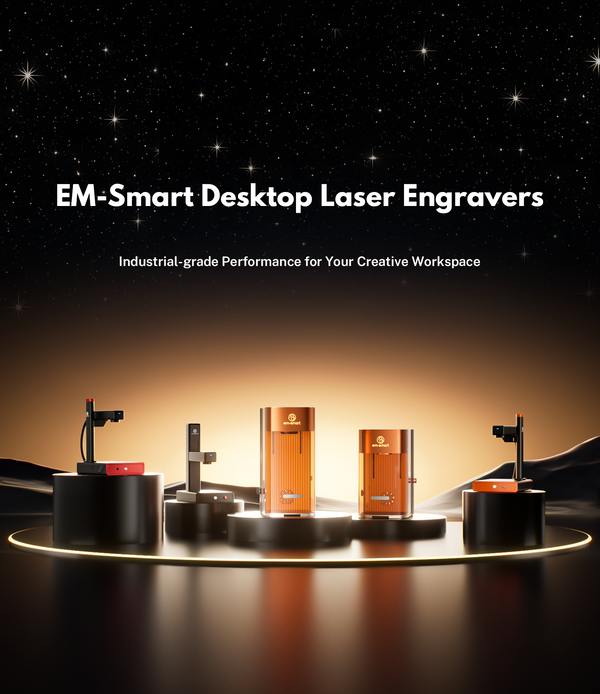
When it comes to selecting the best fiber laser engraver for rifles, pistols, handguns, and shotguns, the em-smart One 20w industrial fiber laser engraver is designed with the needs of gun engravers in mind, offering a combination of portability, speed, precision, and versatility that is unmatched in its class.

World's first foldable and portable fiber laser engraver for laser engraving on metals and non-metals with 8K precision.
Learn More >High-Speed Marking: With a marking speed of up to 10,000 mm/s, the EM-Smart One is five times faster than its competitors, allowing for rapid and efficient engraving of firearms and other materials.
Laser Wavelength: The laser wavelength of 1064 nm ensures optimal absorption and marking quality on metal surfaces commonly found in firearms, delivering crisp, clear, and durable engravings.
Repeat Accuracy: With a repart accuracy of 0.001 mm, the EM-Smart One offers high-precision engraving, thanks to its industrial-grade laser source. This level of accuracy ensures consistent and reliable results, even for intricate designs.
Portable, Foldable, and Easy to Use: The EM-Smart One is designed to be portable and foldable, making it easy to transport and set up in various locations. Its user-friendly interface ensures that even beginners can operate the machine with ease, making it an ideal choice for hobbyists and professionals alike.
Furthermore, EM-Smart One is also equipped for bulk engraving, 100,000 hours of long lifespan.
It is fully compatible with both Ezcad and LightBurn software, providing flexibility and convenience in your engraving workflow. All these make it a standout choice for those looking to achieve exceptional results in weapons engraving projects, including on different polymers, Glock, sig, Pmags, A2 stuff, etc.
Properly setting up your fiber laser engraver is crucial to achieving precise and professional results when engraving guns. Check the video guide below on how to laser engrave on a gun.
Follow these step-by-step instructions to prepare your machine specifically for engraving firearms:
Begin by ensuring that the material parameters on your laser engraving software are set to the specifications of the gun material you intend to engrave. Adjust settings such as laser power, speed, and frequency to match the properties of the metal, ensuring optimal engraving results.
Place the firearm securely in a designated fixture or clamp to prevent movement during the engraving process. Ensure that the gun is positioned flat and level to the engraving bed, with any movable parts or components properly secured to avoid interference with the laser beam.
Use the built-in focusing mechanism on your fiber laser engraver to adjust the focal length of the laser beam according to the thickness of the gun material. Achieve the optimal focal point by adjusting the lens position until the beam is focused to a fine point on the surface of the firearm, ensuring maximum engraving precision.
Access the engraving settings on your laser engraving software and configure the parameters to match the desired depth, speed, and intensity of the engraving. Consider factors such as the complexity of the design and the desired appearance of the engraving when adjusting settings to achieve the desired outcome.
Before proceeding with the full engraving process, perform a test engraving on a scrap piece of the same material to verify the accuracy and quality of the engraving settings. Use this opportunity to make any necessary adjustments to the settings to ensure optimal results on the firearm.
Once you are satisfied with the test engraving results, proceed with the full engraving process on the firearm. Start the engraving job on your laser engraving software and monitor the progress closely to ensure that the engraving proceeds smoothly and accurately.
After completing the engraving process, carefully inspect the engraved markings on the firearm to ensure that they meet your expectations in terms of clarity, depth, and overall appearance. Make any necessary adjustments or touch-ups as needed to achieve the desired result.
By following these step-by-step instructions, you can effectively set up your fiber laser engraver for gun engraving and achieve professional-quality results that enhance the aesthetic appeal and personalization of firearms.
Here are some creative engraving ideas and designing custom templates for gun engraving. You can also download em-smart vector files for free gun engraving patterns to create stunning custom designs.

Free gun engraving patterns Ideas:
Scrollwork and Flourishes
Geometric Patterns
Personal Monograms
Animal Silhouettes
Tribal Designs
Wondering if you can get your name engraved on a gun? The answer is yes! Personalize your firearms with your name or initials for a one-of-a-kind touch that sets your gun apart.
Before embarking on any firearm engraving project, it's essential to understand the legal and regulatory landscape surrounding gun engraving.
One of the most critical considerations in gun engraving is ensuring compliance with firearm identification requirements. Many jurisdictions mandate that firearms must bear serial numbers or other unique identifiers for traceability and accountability purposes.
Additionally, it's crucial to adhere to depth and visibility standards set forth by regulations. Some laws stipulate specific requirements for the depth and visibility of firearm engravings to ensure they are legible and durable.
Go to National Firearms Act Handbook to know what the ATF require for gun engraving.


